

Everyone agrees rural healthcare is short on doctors. That’s true. It’s also the wrong thing to fix first — because you cannot manufacture clinicians fast enough to matter, and even if you could, you’d be pouring them into scaling the wrong unit.
Look at what we actually scale today. The task. The reminder. The outreach call. The overdue-screening nudge. We’ve become genuinely excellent at doing more of them, more cheaply, with a friendlier voice on the line. It’s a better mousetrap — a more efficient way to get one person to do one thing.
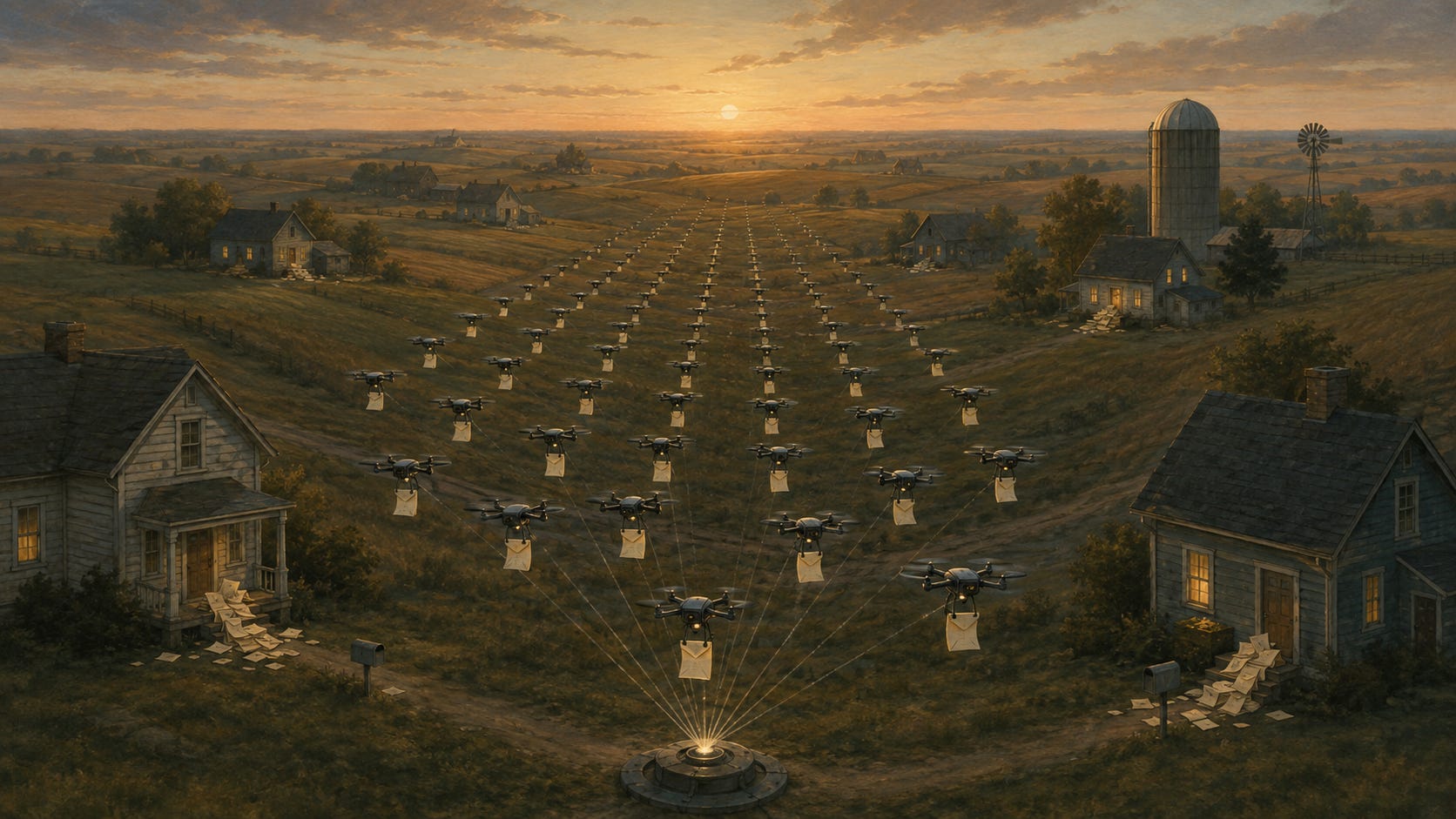
Here’s the problem with a better mousetrap. The person who’s overdue for a wellness visit is almost never overdue for only that. They’re behind on a screening, and a vaccination, and a follow-up, and a medication refill. So the “efficient” system runs five separate campaigns at one human being. That isn’t care. It’s noise. And in a rural community — where the nearest clinic is short three nurses and the same automated voice keeps calling the same short list of people about the same list of tasks — it’s noise that quietly costs you. Every ignored call trains the person to ignore the next one.
We treat the call as the unit of work. One objective, one script, one shot. The alternative is to treat the person as the unit, and the call as just one moment inside a relationship that’s supposed to last for years.
That sounds soft until you sit with what it means where care is scarce. The binding constraint in a rural county usually isn’t information — the patient can look anything up on the same phone we’re calling them on. The constraint is whether there’s a trusted line into the system that knows them: their history, what they’re behind on, what they’re trying to protect, and how they like to be reached. You cannot staff that with clinicians you don’t have. But you can build it, if you stop optimizing the reminder and start compounding the relationship.
There’s a simple test for whether you’ve built the right thing: it becomes a verb. “Just ask it” becomes what people say — the way “Google it” stopped being a company and turned into a reflex. You don’t earn a verb with a sharper script. You earn it by being the same presence, call after call, that remembers the last conversation and picks up the thread.
None of this makes the better reminder worthless. It makes it temporary. A more conversational nudge is a survival move — and within a year everyone will have it, because it’s a feature, and features get copied. The move that actually separates you is the one almost nobody is building, because it’s hard and it only pays off slowly: the relationship that compounds. The system that ties the boring overdue screening to something the person genuinely cares about. That remembers what they told you last time. That earns the right to be picked up on a Tuesday.
In a city, you can paper over a weak relationship with access — another clinic, another option, a specialist across town. In a rural county, you can’t. When you can’t add people and you can’t shorten the drive, the relationship isn’t a nice-to-have layer on top of the care. It is the scalable part. It’s the only lever left.
So the doctor shortage is real. But if we spend the next five years getting better and better at blasting reminders into communities that already screen our calls, we’ll have scaled the one thing that doesn’t matter and eroded the one thing that does.